
How to build a sustainable commercial model for a women's club
Sustainability is not declared: it is budgeted. An operational guide to revenue, costs, scenarios and governance for clubs that want to stop depending on circumstance.
Translation pending editorial review. Original language: Spanish.

Sustainable means funded by the business itself
A women's club is sustainable when its recurring revenue covers its recurring costs without relying on discretionary transfers —from the men's club, the federation or a benefactor— that can disappear with a change of leadership. That definition matters because it sets the priorities: before growing, a club must identify which revenues are recurring and controllable, and build on them.
The starting point is a P&L of its own. FIFA's 2025 benchmarking report documents that most women's clubs worldwide still operate with their accounts integrated into the men's side, which makes it impossible to know whether the business works. Separating the accounts is not an administrative detail: it is the precondition for managing.
The revenue map: five lines, three speeds
The five revenue lines of a women's club are sponsorship, matchday (tickets and hospitality), broadcast rights and content, transfers and player development, and merchandising. They move at three different speeds: sponsorship can grow from year one with active commercial management; matchday and content grow over the medium term along with the product; transfers are the slowest and most volatile line, because they depend on the international market and on the quality of the academy.
The practical implication: the foundation of three-year sustainability is almost always commercial —sponsorship and matchday— not sporting. A club that funds its budget with the expected sale of a player does not have a model: it has a bet.
Sponsorship: package before you sell
The most common mistake is selling "the club" as a single asset at a single price. Professional practice is to build an inventory: naming rights for the stadium or training complex, shirt front and sleeve, training kit, digital content with players, community programmes, hospitality. Pricing each asset separately makes it possible to sell to brands of different sizes and to renew piece by piece instead of betting everything on one contract.
The second mistake is a single price for the whole year. A healthy package has three tiers: a principal partner with broad rights, three to five category partners and a local suppliers programme. Diversification is the risk hedge: losing a principal partner hurts; losing one of eight sponsors is manageable.
Matchday: revenue that is also marketing
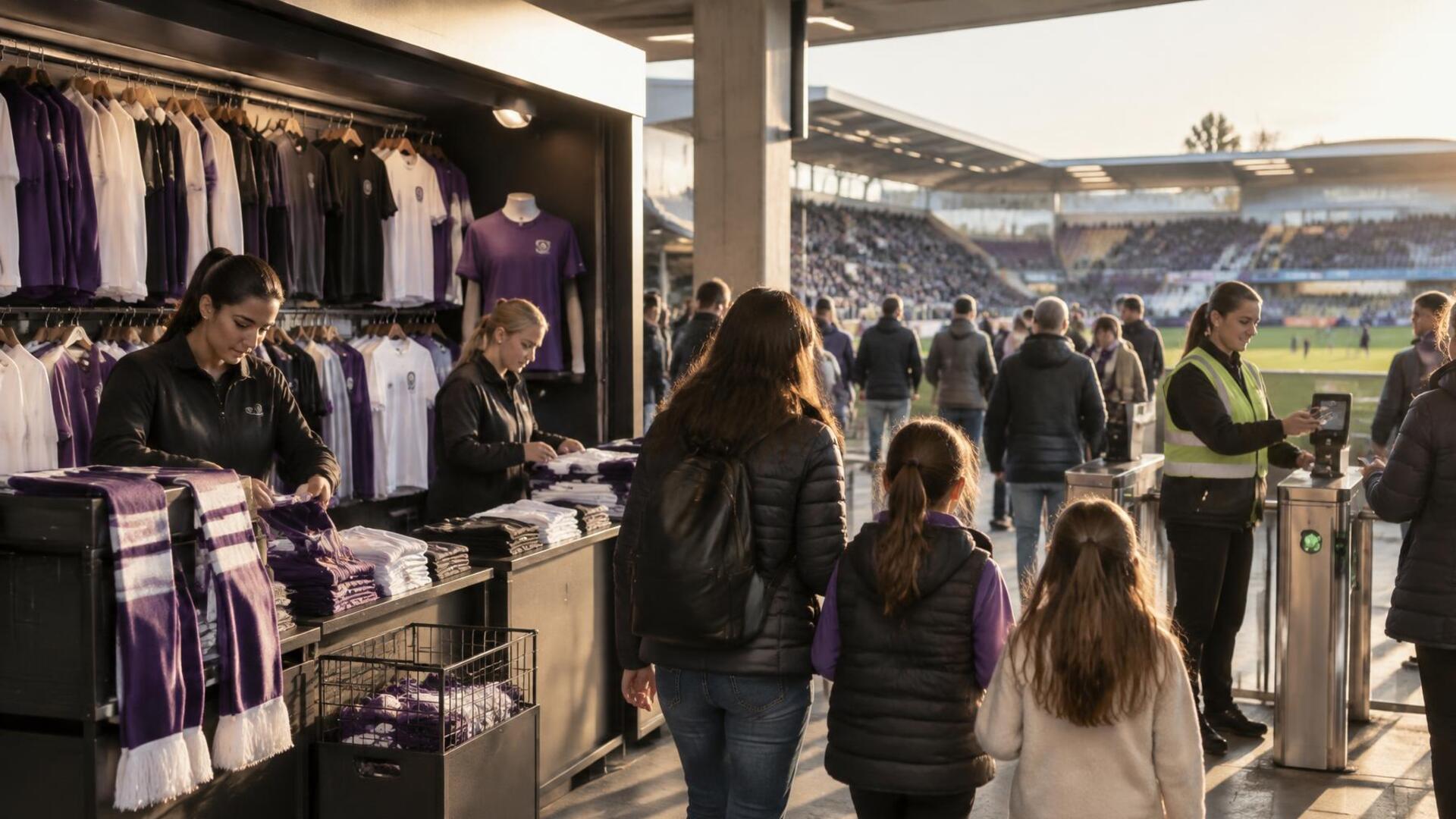
A ticket is not just revenue: it is the mechanism that turns occasional spectators into habitual fans. The levers are well known but demand execution: fixed, family-friendly kick-off times, low entry prices with season tickets that reward loyalty, a stadium experience designed for the actual audience of the women's game —more family-oriented and younger than the men's— and digital advance sales that capture data on every attendee. That data, direct contact with the fan, is worth as much as the ticket: it is the basis for merchandising and for future sponsorship packages.
An illustrative P&L scenario
With figures invented solely to illustrate the structure: a club with an annual budget of US$600,000 could cover it in year three with 320,000 from sponsorship (one principal partner, four category partners, suppliers), 90,000 from matchday with an average attendance of 3,000, 60,000 from content and local licensing, 80,000 from merchandising and 50,000 from prize money and sports grants. Breaking even requires costs to grow more slowly than revenue: discipline on the spending side —a limited squad, structure shared with the men's side wherever possible, no signings the revenue cannot support— is half of the model. This scenario is illustrative and does not represent any real club.
Cash flow: the silent killer
Clubs do not go under because of the annual result but because of the payment calendar. Salaries fall due every month; sponsorship is collected quarterly or by milestones; prize money, at the end. A sustainable model includes a monthly cash projection with three scenarios —base, optimistic and stress, for example the exit of the principal partner— and predefined rules for each one: which expenses are frozen, which contingency lines are activated. A reasonable reserve target is three to six months of fixed costs.
Governance: who decides, with what information
Sustainability is also institutional. Three practices make the difference: a commercial lead for the women's side with their own targets and budget, not an appendage of the men's department; a monthly P&L and cash report to the board held to the same standards as any business unit; and multi-year sponsorship contracts with clear delivery and measurement clauses. Institutional backing exists: bodies such as the IDB have published on women's football as a platform for development, and that framework eases alliances with brands that have an impact agenda —as long as the club arrives with numbers, not just a story.
The right sequence
Separate the accounts, build the commercial inventory, professionalise matchday, measure the audience, and only then scale sporting costs. Sustainability is not the ceiling of ambition: it is what makes ambition sustainable.
Related reading on Upright City Intelligence (in Spanish): “La economía del deporte femenino en Sudamérica” and “¿Es rentable invertir en fútbol femenino en América Latina?”.
Sources
Turn this insight into a commercial strategy.
Speak with Upright City about sponsorship, market entry and partnerships in women's sport.
Let's Talk BusinessTwice-weekly intelligence on women's sports, sponsorships, and commercial opportunities.